Fleet Management for Fire Departments: Real-Time Vehicle Data When Every Second Counts
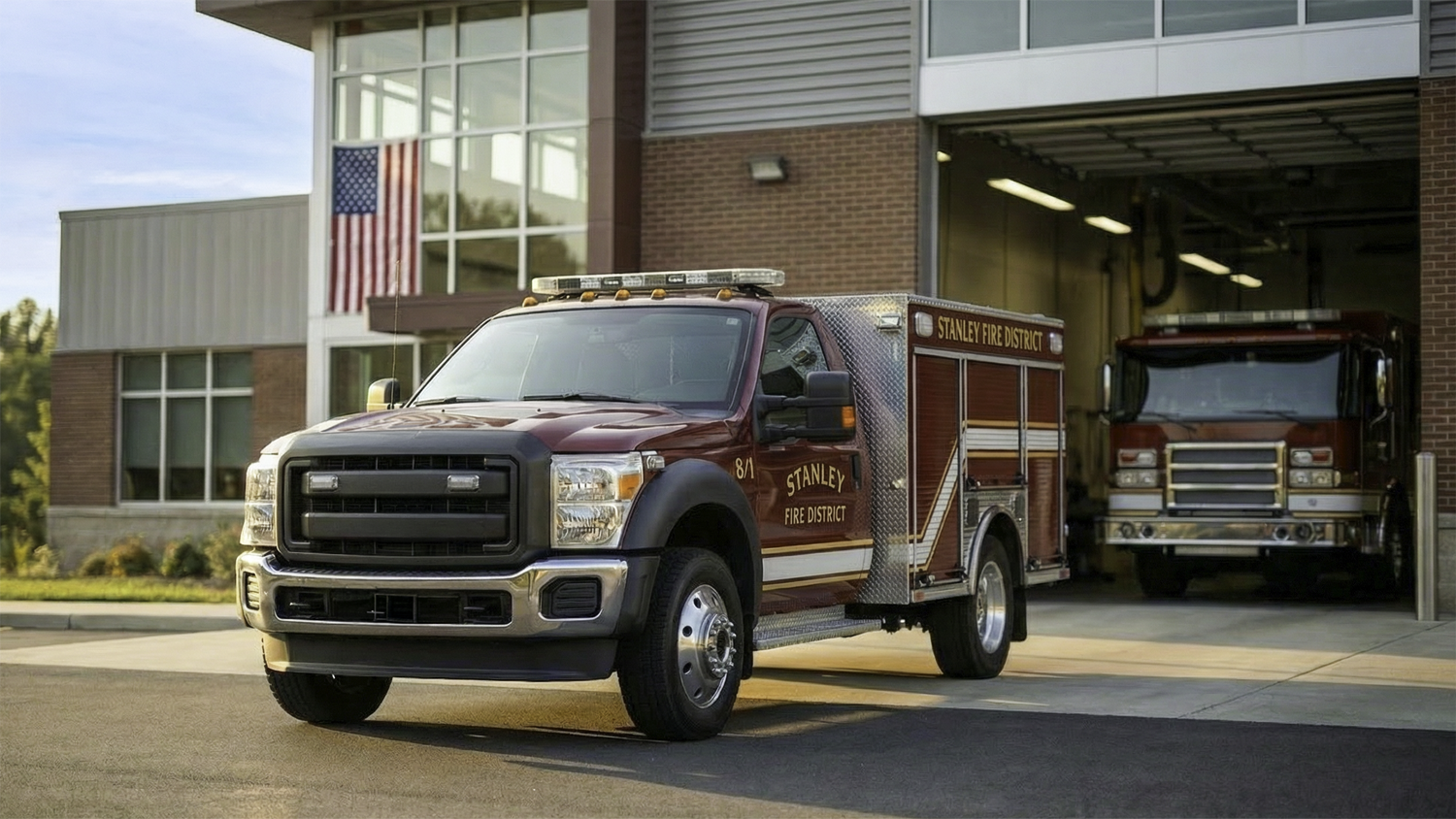
Effective fleet management for fire departments goes far beyond tracking engines and ladder trucks. Primary apparatus including engines, ladders, and rescue trucks are generally well-tracked because operational standards demand it. But the support vehicles that handle inspections, logistics, command, and transport are equally critical to daily operations and far less likely to be managed with real-time data.
Because support vehicles lack the sirens and high price tags of primary apparatus, they rarely receive the same management attention and are far more likely to operate without any real-time oversight. Fire departments may then rely on manual whiteboard tracking and scattered spreadsheets for fleet management, or have no system at all. Without real-time visibility, inefficiencies compound and accountability gaps widen across the entire operation.
For example, fire inspectors might overlap routes across the same districts because dispatch doesn't know where they are. You might have a critical command vehicle completely unavailable when a shift changes because its location is unknown. Fortunately, effective and affordable municipal fleet management systems are available today that provide full operational visibility for all fire department vehicles. This guide covers the operational case for real-time fleet data, the capabilities that matter most for emergency services, and how departments are implementing solutions today.
Why Fire Department Support Vehicles Are Harder to Manage Than You Think
The core reason is that managing fire department support vehicles is fundamentally different from managing a standard corporate delivery fleet.
In the private sector, a single driver may be assigned to one vehicle. More often than not, they drive a predictable route. But in fire department fleet tracking, the environment is inherently unpredictable.
Support vehicles may be shared across multiple shifts, stations, and personnel. There is often no consistent assignment or ownership. A single vehicle might be used for code enforcement in the morning, a logistics run for station supplies in the afternoon, and an emergency support role during a multi-alarm fire at night.
Consider a battalion chief’s vehicle. This isn't just a service truck. It's effectively a mobile command post used across three shifts. Without fleet management for fire departments, outgoing commanders hand over the keys to incoming commanders without knowing where the vehicle has been. They don't know how long it has been idling at scenes or whether it requires maintenance. The vehicles may change hands without friction, but there is no standardized oversight of where they have been or how they have been used.
The result is a fleet management environment where traditional assumptions simply do not apply. Assigning one vehicle to one driver, following predictable routes, and scheduling maintenance by the calendar are all standard practices in private-sector fleets. In fire department support operations, none of those assumptions hold, and relying on them creates real operational risk.
What Effective Fleet Management for Fire Departments Actually Looks Like
So what does effective fleet management for fire departments actually look like in practice? The answer requires redefining the term itself. In a fire department context, fleet management is not about oil change reminders or monthly mileage summaries. It means replacing manual oversight with real-time, actionable data across every support and auxiliary vehicle in the fleet.
This requires live GPS tracking across all support and auxiliary vehicles, feeding data into a centralized dashboard that dispatchers, shift commanders, and maintenance supervisors can all access simultaneously. The goal is to shift from guesswork to data-driven decisions that shape daily workflows.
Consider a battalion chief beginning their shift. Without a fleet management system, they may need to make several phone calls just to locate pool vehicles and verify assignments on a whiteboard.
With fleet management for fire departments, they can simply view a web-based dashboard. They can instantly verify vehicle distribution across the city, ensure inspectors are in their correct zones, and confirm that logistics vehicles are actively in transit. This is more than GPS tracking for fire inspectors. It is effective fleet management.
Where Real-Time Vehicle Data Changes Day-to-Day Operations
With fleet management for fire departments in place, you'll soon notice its direct impact on minute-by-minute decision-making.
When dispatch has full situational awareness of support vehicles, they can make smarter routing decisions.
If a non-emergency call comes in, such as a smoke investigation or a residential code enforcement check, dispatch can easily identify and assign the closest available support unit rather than pulling a primary apparatus out of service. When fire inspectors are actively tracked, you have data to optimize their routes. You don't end up with two inspectors crossing paths or inadvertently overlapping districts.
Manual fleet management makes this kind of duplicate effort inevitable. When dispatch has no visibility into inspector locations, overlapping coverage is not a minor inconvenience. It is a measurable drain on labor, fuel, and response capacity that compounds across every shift.
The Hidden Costs of Limited Visibility Across Support Fleets
The consequences of poor vehicle tracking extend far beyond minor inconveniences.
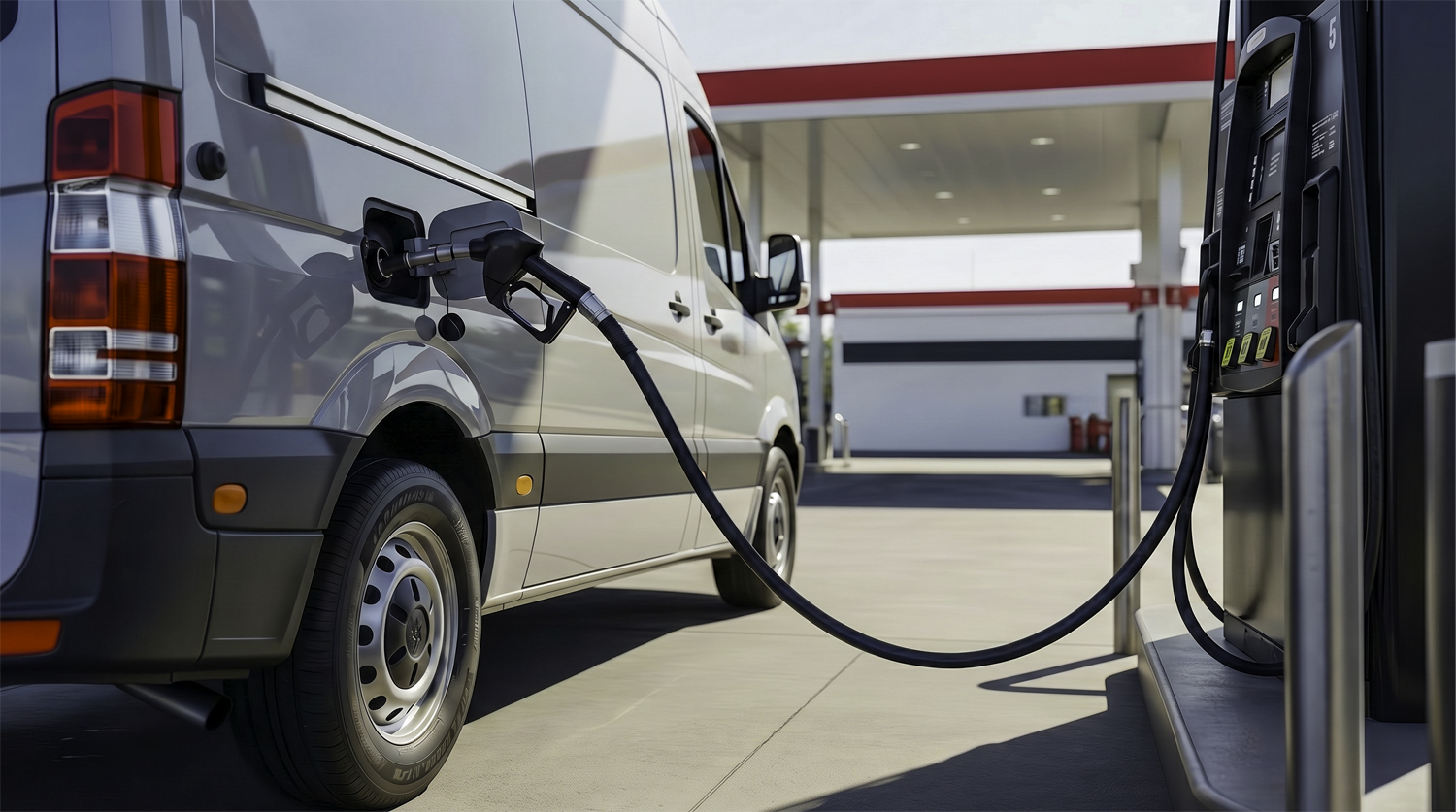
One of the most insidious hidden costs is fuel waste from excessive idling. It's common for command or support vehicles to be left idling at stations or minor incident scenes for hours, entirely unnoticed. An idling V8 engine can consume up to a gallon of fuel per hour. Multiply that by a dozen support vehicles over a year, and the wasted budget is staggering.
You can also see how difficult it is to get fleet utilization right without real-world data to work with. With manual management, some vehicles may be severely overused, racking up engine hours and wear, while others sit completely underused at slower stations. This leaves departments guessing when preparing fuel budgets and lacking the hard data required to justify vehicle replacements.
The core problem is that decisions made without data are not cost-saving measures. They are deferred costs. Untracked idling, unplanned maintenance, and uneven vehicle utilization all accumulate quietly until they surface as budget overruns or unexpected vehicle failures.
Understanding the Cost of Fleet Management for Fire Departments
For many fire departments and municipal buyers, the first question after identifying a need is: what does this actually cost, and how do we justify it?
Enterprise fleet management platforms often carry per-vehicle monthly fees, implementation costs, and long-term contract obligations that put them out of reach for smaller departments or those operating under tight annual budgets. Bouncie is designed specifically to eliminate those barriers, offering low-cost per-vehicle pricing with no long-term contracts and no dedicated IT requirement.
For departments that have not yet quantified the impact of limited visibility, the return on investment becomes clear when broken into three categories of recoverable cost:
Fuel savings through idle reduction: A single support vehicle idling two unnecessary hours per day can waste more than 700 gallons of fuel per year. Across a fleet of ten support vehicles, automated idle alerts alone can recover thousands of dollars annually that would otherwise go unnoticed in a manual system.
Maintenance cost avoidance: Scheduling maintenance based on actual engine hours rather than mileage estimates prevents both premature servicing and costly deferred repairs. For departments replacing a single support vehicle every few years, extending vehicle lifespan by even one cycle represents a significant taxpayer-funded asset protected.
Budget justification with hard data: City administrators and procurement officers rarely approve budget requests based on anecdotal need. Fleet data gives fire chiefs objective, audit-ready utilization reports that clearly demonstrate vehicle demand, wear patterns, and replacement timelines, turning a subjective request into a data-backed case.
The Fleet Management Features Fire Departments Actually Need
Not every fleet management platform is built for the operational realities described above. When evaluating solutions, the feature list that actually matters for fire department support vehicles is shorter than most vendors suggest:
- Real-time tracking frequency: A system that pings a location every 10 or 15 minutes is useless in a fast-moving operational environment. Departments need true real-time tracking with high-frequency updates to know precisely where a vehicle is right now.
- Geofencing: The ability to draw virtual boundaries around fire stations, city limits, or specific inspection districts is crucial. Commanders can then get notifications if a vehicle leaves a designated operational area or arrives at an incident scene.
- Idle monitoring: Because support vehicles typically spend time running while parked, automated alerts for excessive idling can help curb fuel waste.
- Engine hour tracking vs. mileage: A logistics vehicle might only drive 10 miles a day but sit idling at an active fire scene for hours. If you only track mileage, that vehicle looks pristine on paper. Tracking engine hours with a fleet management system reflects its true usage.
OBD-II vs. Hardwired GPS: Which Is Right for Fire Department Support Vehicles?
When evaluating GPS tracking options for fire department vehicles, departments will generally encounter two installation methods: plug-in OBD-II devices and hardwired systems. Both deliver real-time location data, but they serve different operational profiles.
Hardwired GPS trackers are installed directly into a vehicle's electrical system, typically by a technician. They are well-suited for primary apparatus where a permanent, tamper-resistant installation is a priority, and where the vehicle is unlikely to rotate through different users or assignments. For ladder trucks and engines that stay within a defined fleet structure, hardwired tracking is a reasonable choice.
For fire department support vehicles, however, OBD-II plug-in trackers offer a clear operational advantage. Support vehicles are shared across shifts, reassigned between stations, and often rotated in and out of the pool. A plug-in device can move with the vehicle, be redeployed in minutes, and requires no downtime for installation or removal. Departments can launch a five-vehicle pilot in an afternoon without pulling a single vehicle from service.
The practical result is that OBD-II trackers are faster to deploy, easier to scale, and more cost-effective for the support fleet specifically. For most fire departments evaluating fleet management for the first time, starting with OBD-II devices on support vehicles is the lowest-friction path to immediate operational visibility.
Maintenance Planning Based on Real Usage, Not Assumptions
Because of the unique ways support vehicles are used, you can't rely on standard consumer maintenance intervals. For example, if you change the oil on a command vehicle every 5,000 miles, you might be driving an engine to failure, because those 5,000 miles might include hundreds of unrecorded idling hours.
Usage-based scheduling replaces calendar-driven maintenance intervals by anchoring service decisions to real-world engine-hour data. Fleet managers can therefore base maintenance on actual wear and tear rather than assumed mileage. This is true proactive maintenance that actively prevents critical downtime.
For a logistics and supply vehicle, idling may be an inescapable part of its daily operations. It may idle at the station while being loaded, then idle some more at an incident scene while distributing air cylinders. In between, it may only drive very short distances. Scheduling maintenance based on engine hours rather than mileage alone ensures the vehicle remains reliable and ready to respond.
How Fleet Data Supports Accountability and Budget Decisions
Fleet data does more than improve daily operations. At the administrative level, it becomes the primary tool for budget justification, compliance documentation, and long-term planning. Fire chiefs and municipal fleet managers are routinely asked to do more with less, and without hard data, those conversations are difficult to win.
A system of fleet management for fire departments will provide reports with objective, audit-ready data. If a fire chief needs to request funding for three new inspector vehicles, they no longer have to rely on anecdotal evidence. They can walk into a budget review with comprehensive utilization reports showing exactly how many miles and hours the current fleet is logging, proving that the existing vehicles are at or beyond their limits.
Whether for city administrators or government regulators, these reports, based on real-world data, help enforce a culture of accountability.
How to Implement a Fire Department Fleet Management System: A Six-Step Plan
In the world of fire service, a successful deployment requires a practical, step-by-step approach that doesn't disrupt daily operations. Consider this six-point plan:
- Start with the support vehicles: Don't attempt to enroll the entire department in one day. Begin with the assets that have the least visibility, such as logistics and pool vehicles.
- Audit usage: Before making any operational changes, install your first few devices and observe the data for a few weeks to establish a baseline of how vehicles are actually being used.
- Define measurable goals: Identify the issues you seek to fix, and attach numbers to them. For example, if you want to reduce idle time by 20%, see how the system can help you monitor that with real-world data.
- Pilot program: Run a pilot program with a single division, like the fire prevention bureau. You might equip five inspector vehicles, show the inspectors how it works, and review the routing data at the end of the week.
- Train users: Ensure dispatchers, commanders, and fleet mechanics know exactly how to read the system's dashboards and use the data for their specific roles.
- Expand the deployment: Once the pilot is successful and the workflows are established, scale the solution across the rest of the support fleet at a pace that makes sense for your department.
Where Bouncie Fits Into a Fire Department Fleet Strategy
Applying the evaluation criteria above, most fire department support fleets will find that Bouncie meets their operational requirements without the complexity or cost of enterprise platforms.
Bouncie provides high-frequency, real-time data access via a centralized, easy-to-read dashboard. Installation requires no technician. Each device plugs directly into the vehicle's OBD-II port, a diagnostic standard present on virtually all light and medium duty vehicles manufactured after 1996. This means a department can launch a quick pilot deployment for its inspection vehicles in minutes, without taking the vehicles out of service for hardwiring.
Bouncie is built to scale, growing from a five-vehicle pilot to a city-wide deployment at whatever pace the department requires. It directly solves the pain points of hidden idle time, manual tracking, and mileage-based maintenance assumptions, all without long-term contracts or complicated systems requiring a dedicated IT team.
Frequently Asked Questions About Fleet Management for Fire Departments
The following questions address the most common concerns fire chiefs, fleet managers, and procurement officers raise when evaluating GPS tracking for support vehicles.
How accurate is real-time GPS tracking for fire department vehicles?
Modern OBD-II GPS trackers update location every few seconds while a vehicle is in motion, giving dispatch and shift commanders a live, accurate view of all support units at once.
How long does implementation take for a fire department?
With a plug-in OBD-II device like Bouncie, a single vehicle can be live on the dashboard in under five minutes. Following the six-step plan above, departments can complete a full pilot deployment in days, not weeks.
Do GPS trackers work on all fire department support vehicles?
Virtually all passenger vehicles, light-duty trucks, and SUVs sold in the United States from 1996 onward include an OBD-II diagnostic port, which means nearly all modern fire department support vehicles are compatible with plug-in GPS trackers without hardwiring or modifications.
How does fleet tracking data support fire department budget requests?
Fleet management systems generate audit-ready utilization reports showing exact mileage, engine hours, idle time, and maintenance history. These reports give fire chiefs and fleet managers objective data to justify vehicle replacement, fuel budgets, and staffing decisions to city administrators.
From Limited Visibility to Operational Control
Operating a fire department's support fleet without real-time data is a risk that modern emergency services can no longer afford. Support vehicles are critical operational assets, and treating them as such ensures maximum readiness and financial responsibility.
Real-time fleet management for fire departments is no longer a luxury reserved for large metropolitan departments. Explore how Bouncie gives your team the visibility, accountability, and maintenance data it needs to keep every support vehicle ready. Learn more about Bouncie today.