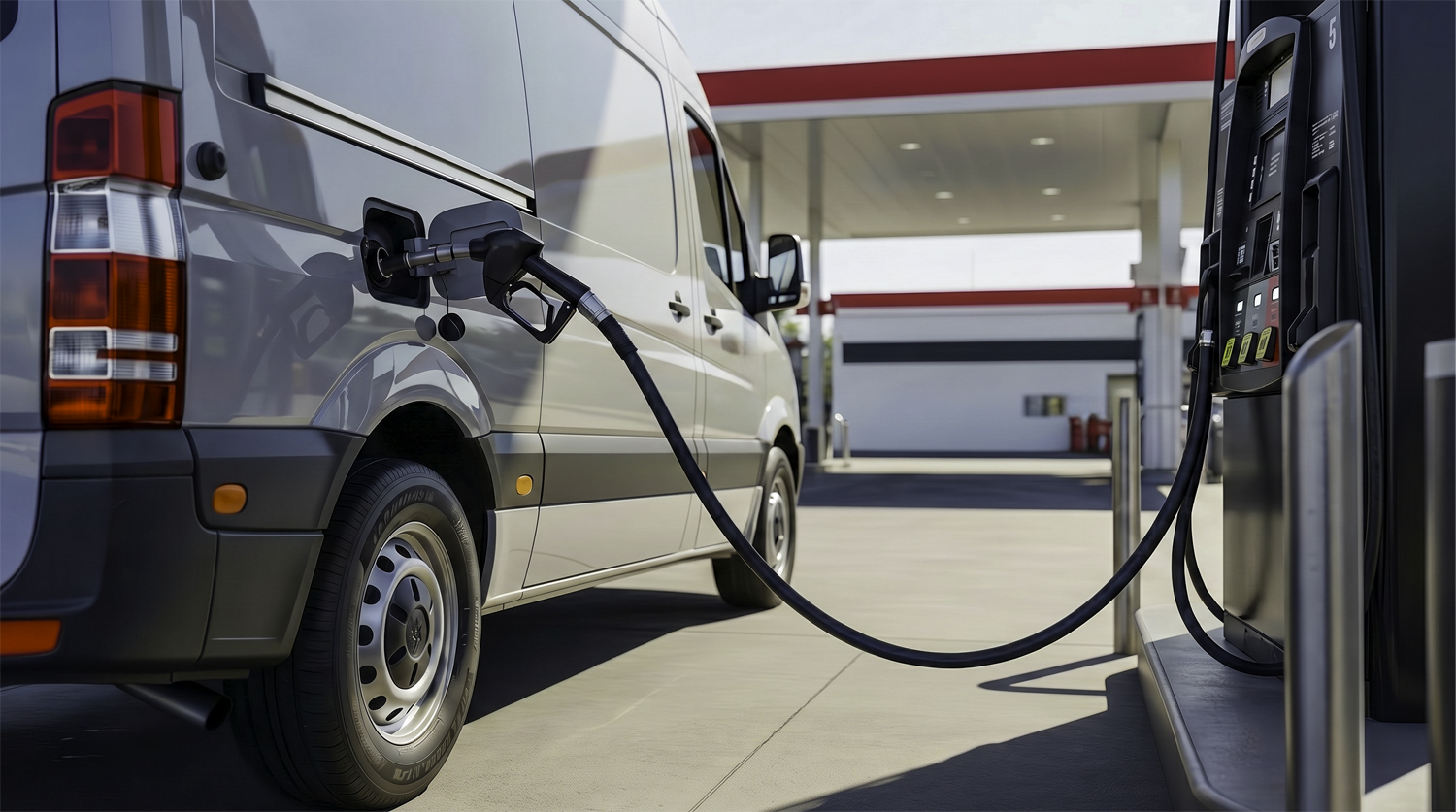
GPS Tracking Explained: What It Is, How It Works, and Why It Matters
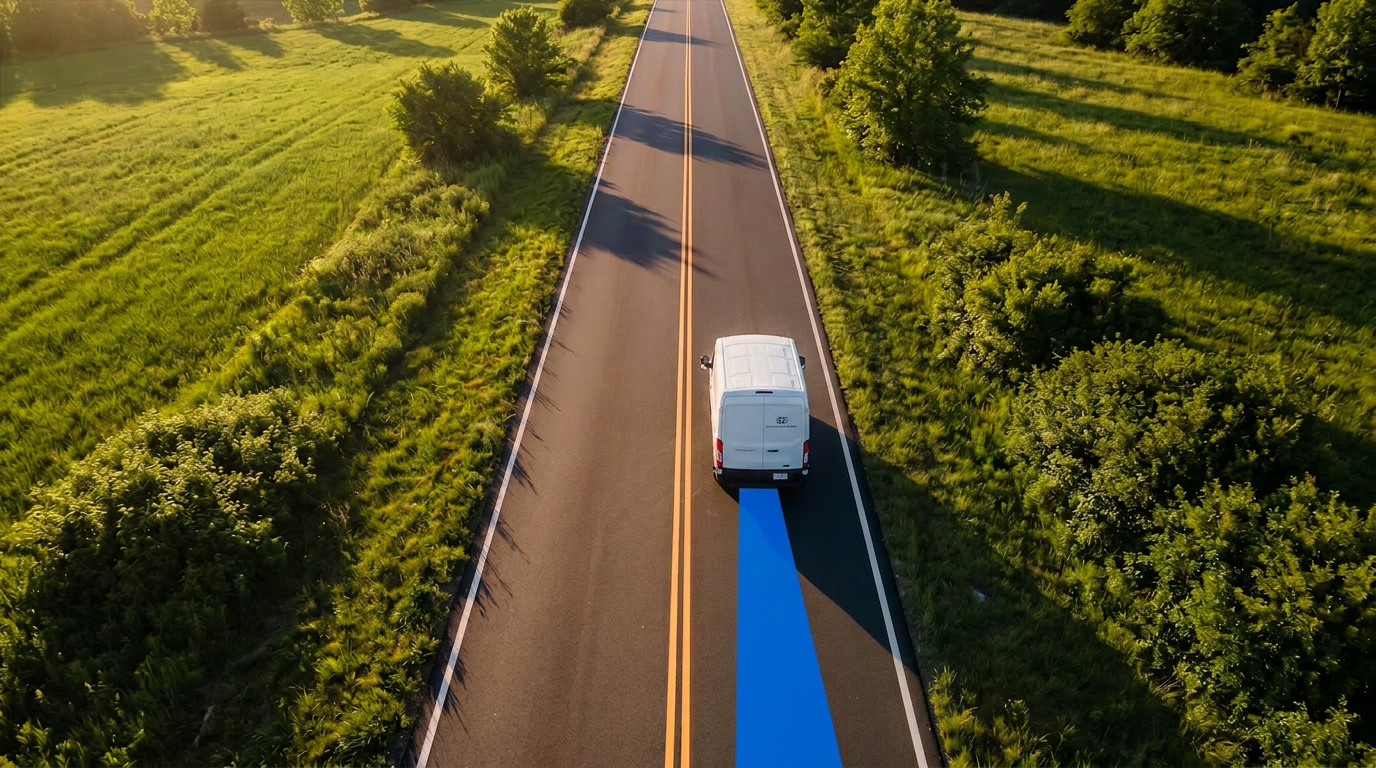
Surveys routinely show that between 68 and 70 percent of companies that use vehicles for business manage their fleets with GPS tracking systems. While that’s a healthy majority, it means that nearly one out of every three fleets is still managed the old-school way: whiteboards, spreadsheets, pen and paper, and lots of phone calls.
The reasons for staying with manual fleet management vary, but they often stem from misconceptions about GPS tracking platforms. Fleet managers at small- to mid-sized businesses often assume these systems are meant for large enterprises or are too costly. They may think the two or three vans they have for their small plumbing or HVAC company can't benefit from the technology. In reality, small fleets often see the fastest ROI from GPS tracking because every vehicle, every mile, and every labor hour carries more weight when margins are tight.
Today, none of these assumptions is true. Not only are there GPS tracking systems designed for small to mid-sized businesses, but they are also affordable and easy to use. More importantly, businesses that have implemented GPS gain a market advantage over competitors that haven’t, thanks to the operational efficiency and cost savings it offers.
If you're unsure whether GPS tracking is right for your fleet, read on. You’ll find out what it is, how it works, and why you really should be managing your fleet with this technology, regardless of how many vehicles you have.
What Is GPS Tracking?
GPS tracking is the practice of using the Global Positioning System to monitor the location and other real-time data of an asset equipped with a GPS tracking device.
The Global Positioning System is a US government-owned utility comprising satellites orbiting the Earth, ground control stations, and receivers (aka GPS tracking devices) that communicate with the satellites.
Originally developed for military applications, the GPS network has been available for public and commercial use since the year 2000. One such application is GPS navigation, found in apps on your smartphone or the dashboard screen in your car. Whereas navigation is designed to help you travel from one point to another without getting lost, the purpose of GPS tracking is to enable businesses or individuals to pinpoint the locations of their vehicles in real time.
Today’s vehicle GPS technology is ideal for numerous use cases, including:
- Commercial fleets: Managers can monitor fleets in real time to ensure route compliance, manage driver hours, and coordinate service calls.
- Delivery and logistics: GPS technology helps provide customers with more accurate ETAs and ensures that high-value cargo stays on its designated route.
- Insurance: Carriers use GPS telematics data to validate claims and offer usage-based commercial insurance rates.
- Family driving: GPS gives parents the tools to monitor teenage drivers' habits and ensure their safety.
- Car-sharing and mobility providers: Tracking systems help keep tabs on decentralized vehicle inventories, ensure assets are returned to their proper locations, and monitor vehicle health.
How Does GPS Tracking Work?
Now, let’s take a look at how GPS tracking works by breaking the system down to its main components.
First, there is the GPS tracking device itself, which listens for signals broadcast by the orbiting GPS satellites. To determine its location, the device uses a mathematical process called trilateration (or, in common vernacular, triangulation). By measuring the time it takes for satellite signals to reach the receiver, the tracker can calculate its exact latitude, longitude, elevation, and the speed at which it is traveling.
The tracker must then transmit this GPS data so that the end user can see it. How this happens depends on the type of tracker, and for fleet operators, this distinction is an important buying decision. Passive trackers record data to internal memory, and the only way to retrieve it is by physically connecting the device to a computer and downloading the stored data. This approach works for basic mileage logging but offers no visibility into what is happening in the field right now. Real-time trackers, by contrast, transmit location and vehicle data continuously over cellular networks, giving fleet managers live visibility into every vehicle at any moment.
For most business applications, real-time tracking is the only option that delivers actionable operational value. These devices are equipped with cellular modems and use the same LTE, 4G, and 5G networks smartphones do to transmit data to a cloud-based server. From there, the platform’s software retrieves the data from the cloud and presents it in different formats (live maps for real-time tracking, historical route playback, travel reports, etc.).
Modern GPS tracking systems are highly accurate, typically placing a vehicle's location within 10 to 15 feet under open-sky conditions. Accuracy can be affected by dense urban environments, tunnels, or heavy tree cover, where satellite signals are partially blocked. Reputable platforms address this by combining GPS data with cellular network positioning to maintain reliable location updates even in challenging environments. For fleet operators, this level of reliability means you can trust the data your system provides when making routing decisions, resolving customer disputes, or reviewing driver activity.
Core Features of Modern GPS Tracking Systems for Fleets
A GPS tracking system’s software is perhaps the most important component, as it provides the features that fleet managers and other authorized personnel use to streamline daily operations. The main features of most modern GPS tracking systems are:
Real-time location tracking and trip history: The best systems today ping a vehicle’s location every few seconds, which provides smooth, accurate movement on a live digital map. They can also use historical data to see the exact routes fleet vehicles took, including start and stop times and the duration of customer site visits.
Geofencing: Geofencing lets you draw virtual boundaries on the system’s digital map and receive notifications when company vehicles enter or exit these areas. For example, you might define your company headquarters or a customer warehouse as a Geo-Zone, so that you know when one of your drivers leaves or arrives. Geofencing is also an excellent tool for monitoring unauthorized use and securing company cars after hours.
Driving behavior and diagnostics monitoring: Tracking devices that plug directly into the standard OBD-II port can tap into the vehicle’s computer systems. This access allows you to monitor driving behavior and receive alerts for events such as harsh braking, rapid acceleration, and excessive idling. You can also receive alerts for diagnostic trouble codes (DTCs), low battery voltage, and fuel levels.
APIs and integration with business software: APIs allow software to exchange critical data with other business apps. Some tracking platforms provide an API that enables GPS data to flow seamlessly into dispatching systems, payroll software, and CRM tools. These integrations further help streamline and automate daily operations.
Why GPS Tracking Matters for Fleet Operations
The features described above are compelling on paper, but the real question for any fleet operator is whether GPS tracking delivers measurable results in day-to-day operations.
In today’s business environment, the answer is a resounding yes. The reason goes beyond a simple list of features. A GPS tracking platform streamlines your operations, reduces costs, and keeps you competitive in the marketplace.
With a GPS tracking platform, you always know where field teams are and when they will arrive at their next job. The system also helps prevent vehicle misuse and deter theft, which alone justifies the investment for many businesses. Beyond security, the operational efficiency gains are where GPS tracking delivers its most consistent and measurable value.
By monitoring driver behaviors and vehicle health, you can reduce fuel and maintenance costs, which are typically the two largest controllable expenses in any fleet budget. Studies from fleet management industry groups have found that GPS tracking can reduce fuel costs by 10 to 15 percent through reduced idling and optimized routing alone. When you factor in extended vehicle lifespans from proactive maintenance, reduced overtime from more efficient scheduling, and fewer unauthorized vehicle uses, the ROI case for GPS tracking becomes difficult to ignore even for the smallest fleets.
Perhaps most importantly, a tracking system helps you provide better customer service. Your dispatchers can provide clients with accurate ETAs, backed by real-world data. If a driver is delayed by traffic, the home office can proactively alert the customer or dynamically reroute another vehicle to handle the call. Keep in mind that your competitors may already have GPS systems in place that allow them to make these same improvements. Ultimately, GPS tracking matters because it enables your fleet to deliver the service today’s customers expect.
Using GPS Tracking Data to Improve Fleet Performance
To gain these advantages from a GPS tracking system, you have to go into it with a strategy. The key is learning how to act on the data your system provides. Here are four ways to build a data-driven strategy with your GPS tracking system.
- Improve routing and scheduling: Use historical trip data to analyze the efficiency of your drivers' routes. Review time spent on specific routes and the duration of on-site service calls, and identify what takes longer than expected. Adjust your routing and scheduling based on what you find, and track the improvements over time.
- Implement predictive maintenance: Rather than scheduling shop visits based solely on mileage, use vehicle health alerts and diagnostic data to service vehicles based on actual operating conditions.
- Lower your insurance premiums: Some insurance carriers offer discounts on commercial premiums based on telematics data. Work with your provider to find out whether sharing your GPS telematics data qualifies your business for a reduced commercial rate.
- Prepare for the future: Artificial intelligence is making its way into every corner of business, and fleet management is no exception. Future platforms will go beyond reporting data, autonomously analyzing it to recommend the most fuel-efficient routes and predict mechanical failures weeks before they occur. The best way to prepare for the next tech revolution is to have a good system in place now.
How Bouncie Delivers Business-Ready GPS Tracking
At this point, you may be convinced that GPS tracking could transform your fleet operations. The most common objections that remain are cost and commitment. Many fleet managers assume that powerful tracking platforms require large upfront investments and lock businesses into multi-year contracts. Bouncie was built specifically to remove both of those barriers, offering a modern and capable GPS tracking platform designed for fleets of all sizes.
The Bouncie GPS tracker comes with an intuitive smartphone app that provides all the real-time tracking, trip history, and reporting features you need in one easy-to-use package. Bouncie provides real-time tracking over cellular networks with no long-term commitments. You simply pay month-to-month and add as many Bouncie trackers as you want, on your own schedule and within your budget.
Unlike enterprise-class systems that require complicated hard-wired installations, Bouncie simply plugs into the vehicle's OBD-II port and immediately begins broadcasting real-time insights over a robust cellular network. As your business grows, Bouncie scales with it, so you can add devices on your own schedule without contracts or minimum commitments.
Bouncie also has a robust open API, so that you can easily integrate fleet GPS data with your other business software. Features like these make Bouncie one of the most accessible and capable GPS tracking platforms available for small and mid-sized fleets.
GPS Tracking FAQs
What is the difference between GPS tracking and smartphone location sharing?
Smartphone location sharing is designed as a personal tool and lacks the advanced features of a GPS tracking platform. For it to work, the driver's personal device must be powered on and have location sharing enabled.
However, smartphones can be easily turned off and tend to drain their batteries quickly. Location-sharing apps tend to provide infrequent location updates, usually to help save battery life. Meanwhile, a dedicated vehicle GPS tracker draws power from the vehicle, monitors vital engine diagnostics, and provides highly secure, continuous location updates regardless of whether the driver's phone is powered on.
Is GPS tracking affordable for small businesses and small fleets?
Yes, with platforms like Bouncie, small businesses can access GPS tracking at a price point that makes sense. Bouncie eliminates the massive upfront hardware and installation costs associated with enterprise systems. It also offers an affordable, flexible monthly subscription model that helps you see positive ROI through fuel and efficiency savings.
Is GPS tracking legal, and what do businesses need to know about employee privacy?
Tracking company-owned vehicles is legal and considered a standard practice today. However, your business must still adhere to ethical standards and local employee tracking laws. If applicable in your area, these laws generally require organizations to clearly disclose the presence of tracking devices to their drivers and establish clear policies on how the data will be used.
How accurate is GPS tracking for fleet vehicles?
Most modern GPS tracking systems are accurate to within 10 to 16 feet under normal outdoor conditions. Accuracy can decrease slightly in dense urban areas or locations with limited sky visibility, such as parking garages. Quality platforms compensate by combining GPS satellite data with cellular network positioning, which helps maintain consistent location accuracy across a wide range of environments. For day-to-day fleet management, this level of accuracy is more than sufficient for routing, dispatching, and activity verification.
Is GPS tracking worth it for a small fleet of two or three vehicles?
Yes, and in many cases small fleets benefit more immediately than large ones. When you are managing a handful of vehicles, every inefficient route, every unauthorized trip, and every missed maintenance window has a direct and visible impact on your bottom line. Affordable, plug-and-play platforms like Bouncie are specifically designed to deliver enterprise-level visibility without the enterprise price tag, making GPS tracking a practical and fast-payback investment for even the smallest fleets.
What data does a GPS tracking system collect, and how is it protected?
A vehicle GPS tracker collects location coordinates, trip history, speed, driving behavior events such as hard braking or rapid acceleration, and vehicle diagnostic data. Reputable platforms store this data on secure, encrypted cloud servers and limit access to authorized users only. Fleet managers should review their provider's data retention policies and confirm that data access controls meet their internal IT and compliance requirements.
Do employees need to be informed that their vehicle is being tracked?
In most jurisdictions, employers are legally permitted to track company-owned vehicles without employee consent, since the vehicle itself is company property. However, many states have notification requirements that obligate employers to inform drivers that tracking devices are in use. Beyond legal compliance, transparent communication about GPS tracking policies tends to improve driver buy-in and reduces friction during rollout. Best practice is to include GPS tracking disclosure in employee agreements and establish a clear written policy on how the data will be used.
Start Managing Your Fleet With GPS Tracking
You now have a clear understanding of what GPS tracking is, how it works, and why it gives fleet operators a measurable advantage over competitors still relying on manual methods. The next step is to find the system that works for your fleet. Bouncie proves that you do not need an enterprise budget to access powerful GPS tracking and position your fleet for what comes next.
To get started, learn more about Bouncie and see how it can work for your fleet.