What Is ADAS (Advanced Driver Assistance Systems)?

Safety has always been a high priority in the world of commercial transportation, but there was only so much you could do as a fleet operator or risk manager. You could mandate safety training, monitor driver behavior, and ensure your vehicles were roadworthy. In this traditional paradigm, safety is a metric measured by the absence of accidents. But what if you could take an active, more technology-driven approach?
ADAS, or Advanced Driver Assistance Systems, is a suite of in-vehicle safety technologies designed to reduce collisions and support safer driving in commercial and consumer vehicles. Originally a high-end feature in luxury consumer vehicles, ADAS is expanding its reach and is poised to become a new pillar of modern commercial fleet management. Here is a clear explanation of what ADAS is, how it works, and why it matters for commercial fleet operations.
What Is ADAS and How Does It Work in Fleet Vehicles?
ADAS is a system of integrated sensors and software that continuously monitors the vehicle's surroundings and provides alerts or automatic interventions to help prevent collisions. A common misconception about ADAS is that it's meant to replace the driver.
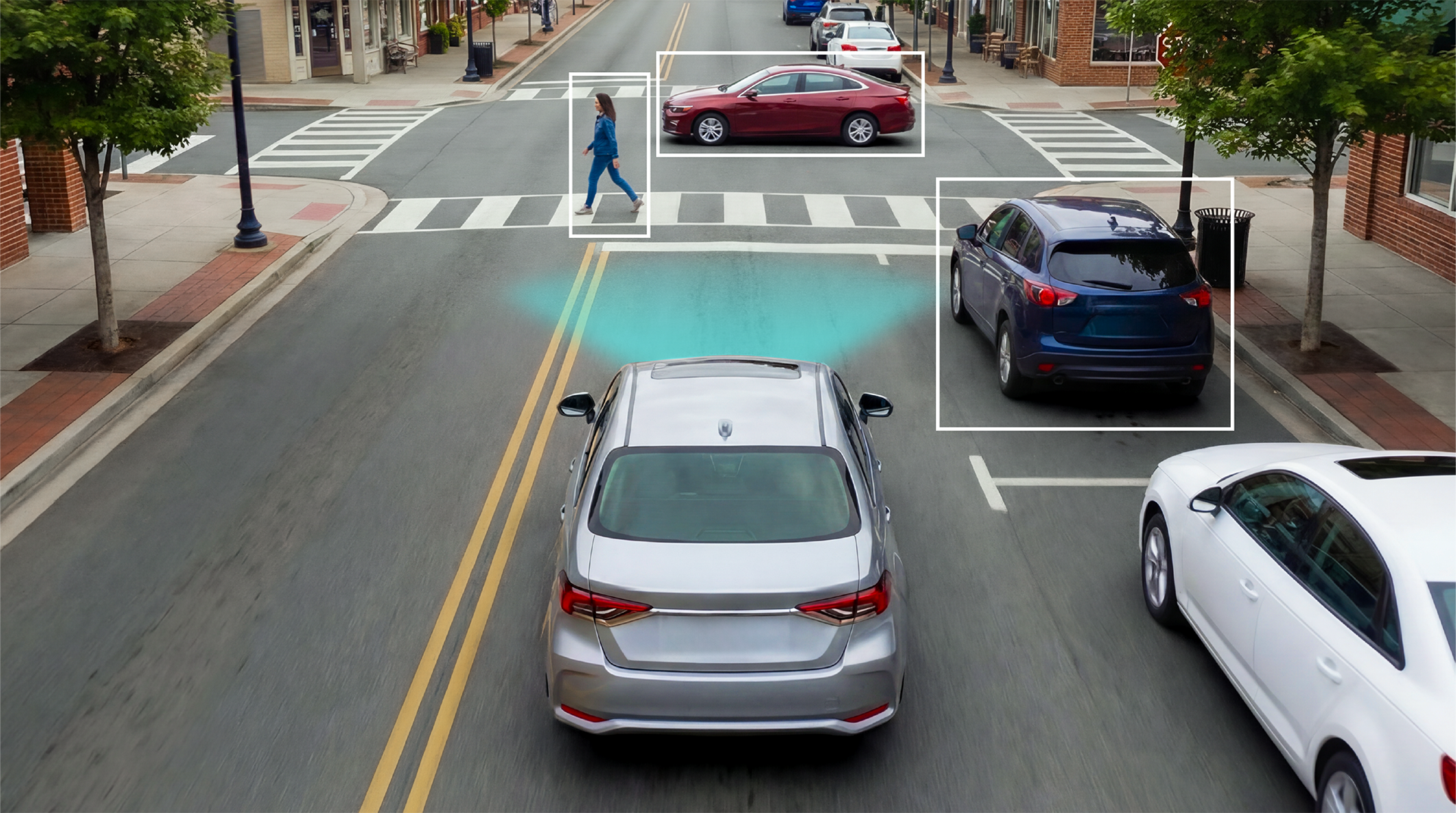
For fleet operators, ADAS is not just a driver convenience feature. It is a risk mitigation system that uses cameras, radar, and onboard software to identify hazards and intervene or alert drivers before a crash occurs.
In practical terms, ADAS supports the driver with continuous alerts and limited interventions, while the driver remains responsible for safe operation.
ADAS collects and analyzes real-time data from multiple sensors to assess risk and determine whether to warn the driver or automatically intervene. Core ADAS components include:
- Cameras, which are used to read lane markings and traffic signs, while detecting pedestrians and other vehicles.
- Radar and LiDAR emit radio waves or light pulses to measure the exact distance and speed of objects surrounding the vehicle, to help ADAS operations even in poor visibility.
- Ultrasonic sensors, which are typically located on bumpers for close-proximity detection during parking maneuvers.
- Processing Software: The system that analyzes sensor data to determine whether a threat exists and how to respond.
Common ADAS Features
In fleet and commercial vehicles, these ADAS features are primarily deployed to reduce crash frequency, limit liability exposure, and standardize safe driving behavior.
- Collision Avoidance/Automatic Emergency Braking (AEB) detects an imminent forward crash and automatically applies the brakes.
- Lane Departure Warnings (LDW) alert the driver if the vehicle drifts out of its lane.
- Adaptive Cruise Control (ACC) maintains a set speed while automatically slowing to keep a safe following distance from the vehicle ahead.
- Blind Spot Monitoring (BSM) warns the driver of vehicles hidden in their blind spots during lane changes.
Levels of Automation
For fleet operators and risk managers, ADAS represents a shift from reactive accident reporting to proactive crash prevention. However, the revolution has only just begun. The Society of Automotive Engineers (SAE) has defined six levels of vehicle automation, from 0 to 5. Right now, you typically only find fleet ADAS implementations that reach Levels 1 and 2.
Level 1 is defined as driver assistance and includes features like ACC. Meanwhile, Level 2 is a state of partial automation in which the vehicle can control both steering and acceleration/deceleration, but the driver must remain fully engaged.
Regulatory and industry pressure is also accelerating ADAS adoption. In recent years, safety agencies such as the National Highway Traffic Safety Administration have expanded crash avoidance testing and encouraged broader deployment of technologies like automatic emergency braking. In parallel, large enterprise fleets and insurers are increasingly viewing ADAS as part of a formal risk management framework rather than an optional feature. For fleet operators, this shift signals that proactive safety technology is quickly becoming an operational expectation.
ADAS and Dashcams: The New Safety Pairing
Beyond the SAE automation levels, perhaps the most prominent advancement in commercial ADAS fleet management is its pairing with an existing technology: dashcams.
Historically, fleet dashcams served as a passive witness. They were there to provide video evidence after a crash. Today, ADAS dashcams incorporate automation functionality, either natively or by integrating the vehicle's native ADAS features. In practice, this means that instead of just recording, these cameras can actually "see" the road and analyze risk in real time.
When ADAS dashcams detect threats, such as tailgating or drifting across a lane marker, the camera provides instant visual and audible alerts inside the cab. This real-time feedback prompts the driver to correct their behavior before an incident happens.
For fleet managers, ADAS dashcams not only help keep their teams safe, but they also capture driver-facing video that can be used for later coaching. It creates a documented record, backed by data, that supports consistent coaching and measurable safety improvement.
The Business Case for ADAS in Fleet Operations
For decision-makers, the key question is whether ADAS delivers measurable return on investment across safety, liability, and operational continuity. Industry data supports a strong business case for ADAS in commercial fleet environments, based on the following measurable outcomes:
Asset Protection and Reduced Downtime
Every accident involves hidden costs far beyond the repair bills. There are all the expenses associated with vehicle downtime, like missed deliveries and reputational damage. But what if you could cut the risk of accidents in half?
A 2025 study by the Partnership for Analytics Research in Traffic Safety (PARTS) found that AEB systems reduced front-to-rear crashes by more than 50% in modern vehicles. This drastic drop alone positions ADAS technology as one of the top risk management solutions in commercial fleet management today.
Liability Reduction and Insurance Benefits
Jury verdicts against commercial fleets can cost companies millions of dollars. With the stakes so high, nearly anything that can reduce the risk of accidents and ending up in court can be seen as a worthy investment.
An October 2025 Evercore ISI report concluded that vehicles equipped with ADAS experienced both a 24% lower claim frequency for bodily injury and a 19% reduction in property damage claims compared to non-ADAS vehicles.
Data-Driven Driver Coaching
ADAS systems generate objective safety alerts that help fleet managers identify high-risk driving patterns across the fleet, such as repeated hard braking or tailgating. By identifying drivers who need a bit of coaching, ADAS helps fleet managers make roads safer for their teams and the general public.
Key Benefits of ADAS for Fleet Operators
For decision-makers evaluating ADAS adoption, the advantages can be summarized clearly:
- Reduced crash frequency through real-time alerts and automated interventions
- Lower liability exposure supported by objective event data
- Potential insurance premium improvements tied to safety performance
- Improved driver accountability and coaching through actionable safety insights
- Greater operational continuity by minimizing downtime and disruption
- Stronger compliance posture as safety technology expectations evolve
This summary provides a concise framework for evaluating ADAS as both a safety tool and a strategic risk management investment.
ADAS Implementation Considerations for Fleet Operators
While ADAS offers clear safety advantages, successful fleet implementation requires structured planning, policy alignment, and driver communication. Consider these factors when evaluating ADAS for your fleet:
- Compatibility: While newer vehicles likely have some ADAS built in, older ones may require aftermarket equipment.
- Calibration and maintenance: ADAS relies on sensors and other delicate, precise equipment. If you replace a windshield or your vehicle suffers a minor fender bender, the cameras and radar might need to be professionally recalibrated.
- Privacy concerns: Drivers are often skeptical of new in-cab technology, viewing it as surveillance. Fleet operators must make it clear that the technology is designed to protect drivers and exonerate them in the event of a not-at-fault accident, rather than serve as a punitive tool.
ADAS FAQs for Fleet Operators
Here are answers to the questions fleet managers most often have about ADAS:
Does ADAS work in all weather conditions?
In most conditions, yes, but performance can vary. While radar can penetrate fog and rain reasonably well, optical cameras can be blinded by heavy snow, torrential rain, or direct sunlight. Drivers must understand that ADAS is an aid and not a replacement for cautious driving in adverse weather.
Can I install ADAS on older fleet vehicles?
Yes. While you cannot easily retrofit deep mechanical systems like AEB into an older truck, you can install aftermarket ADAS dashcams that provide forward-collision and lane-departure warnings to the driver via audio alerts.
Is driver training required for ADAS systems?
Yes, training is a must. You want to avoid a phenomenon known as "automation complacency," which is where drivers over-rely on the system and tune out. Drivers must be trained on what the system can do, its limitations, and the specific meanings of its auditory alerts.
What's the difference between ADAS and standard dashcams?
A standard dashcam only records video to an SD card or the cloud. An ADAS dashcam actively analyzes the video feed in real time to detect hazards (such as pedestrians or insufficient following distance) and immediately alerts the driver to prevent a crash.
Do insurers offer discounts for ADAS-equipped vehicles?
It's becoming common for insurance companies to offer discounts for vehicles equipped with ADAS. As studies continue to show ADAS's ability to reduce claim frequency and severity, many commercial carriers are factoring ADAS and AI dashcams into their underwriting processes and offering premium discounts.
Why ADAS Is Essential for the Future of Fleet Safety
For fleet operators, integrating ADAS with intelligent dashcams creates a layered safety system that combines real-time intervention, documented evidence, and actionable driver data. But it's only just the beginning.
As ADAS adoption accelerates, fleets that implement these systems early are better positioned to reduce crash frequency, strengthen compliance posture, and negotiate favorable insurance outcomes. To learn more about Bouncie's vision for the future of smart safety, check out our fleet management resources.