Fleet Management Platform Buyer's Guide: What Actually Matters in 2026

Choosing the right fleet management platform in 2026 means navigating a crowded market full of overpromised features and underwhelming results. Most fleet management software in 2026 follows the same playbook. Vendors pack in as many features as possible, lead with buzzwords, and promise to solve every operational challenge your business faces. For fleet managers, operations leaders, and business owners trying to make a practical decision, that approach creates more confusion than clarity.
The problem with trying to be the Swiss army knife of fleet management is that it makes it difficult to separate genuinely useful tools from needlessly complex ones. Yet, when you’re presented with so much hype, it’s easy to feel like the platform with the longest feature list must be the winner.
After all, it checks all the boxes, so it surely has everything you need. And if it has features you don’t use now, you’ll surely need them later, right? Unfortunately, no. If you buy a bloated fleet management platform, it will be much harder to get your team to use it, and there’s no good reason to pay for features you won’t use. The better plan is to evaluate platforms based on the specific functionality your fleet actually needs, and choose a streamlined system that has everything you need and nothing you don't. This guide covers exactly how to do that.
Why Fleet Management Platform Choices Have Become Overcomplicated in 2026
To calibrate your evaluation criteria, it helps to understand why fleet management software in 2026 is full of monolithic, complex systems. These tools have become significantly overcomplicated over the past five years, and the market looks drastically different as a result.
As fleet telematics hardware has advanced and 5G has become a connectivity standard, the sheer volume of data a vehicle can collect and transmit has skyrocketed. Fleet telematics is the foundation of any modern platform, combining GPS tracking, vehicle diagnostics, and driver behavior data into a single data stream. The problem is that vendors have responded by piling every possible telematics feature into their platforms, regardless of whether their customers will ever use them.
The result is a perpetual arms race, where vendors compete by adding features rather than improving what already exists. This has led to a rise in all-in-one platforms that may bundle everything from routing and HR compliance to vehicle tracking and predictive maintenance. While these inflated platforms may look impressive on paper, modern fleet technology trends have created a wide gap between the features a provider offers and what a business actually needs on a daily basis.
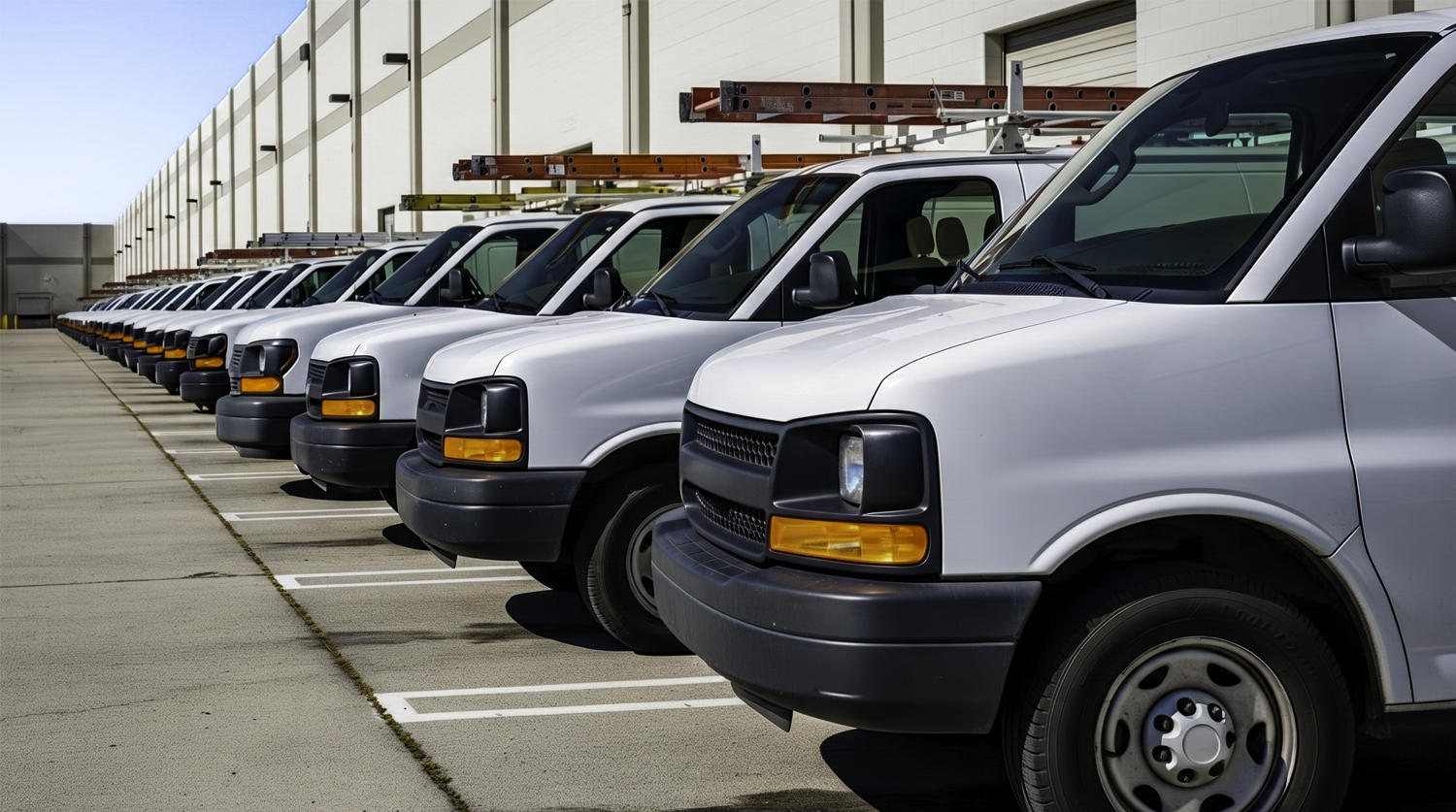
Consider a local business with a fleet of 15 vans. Their daily concerns are focused on a handful of things, such as ensuring technicians arrive at job sites on time, preventing unauthorized after-hours vehicle use, and monitoring basic maintenance like oil changes. But too often, a business like that will buy a platform with way more than they need and end up paying a hefty premium for long-haul trucking compliance tools, heavy-equipment asset trackers, and AI-powered route optimization algorithms they will never touch.
What a Fleet Management Platform Actually Needs to Do
When you strip away the buzzwords, the core requirements of a fleet management platform are straightforward. You need to know where your vehicles are, how your drivers are operating them, and when something requires your attention. Everything else is secondary.
If a customer calls asking where their delivery is, all you have to do is glance at a screen to find the nearest available van and calculate an accurate ETA. Therefore, a fleet management platform only needs simple tools for dispatch and coordination.
The system should also offer insights into driver behavior and vehicle usage. For example, if some of your vehicles are idling for extended periods, the system should notify you. It should do the same if your tech is speeding or driving aggressively through residential neighborhoods, risking your company’s reputation.
The bottom line is that a fleet management platform should surface the right information at the right moment without requiring you to dig for it. If you need a data science degree to find out which vehicles need an oil change or which driver was speeding yesterday, the platform is working against you, not for you.
Core Fleet Management Platform Features That Still Matter in 2026
Despite the complexity of today's market, the core features that make a fleet management platform genuinely useful are consistent across most fleet types and sizes. The following four capabilities should be present in any platform you seriously consider.
Real-Time Tracking and Trip History
At a minimum, any GPS fleet tracking platform must show your vehicle's activity in real time and offer the ability to review past trips. This means up-to-the-minute locations of every vehicle on a live map and easily accessible trip histories. Most modern platforms rely on an OBD-II fleet tracker, a small device that plugs directly into your vehicle's OBD-II port and begins transmitting location, speed, and diagnostic data immediately. This approach requires no professional installation and works across nearly any vehicle made after 1996.
Idle Time and Usage Monitoring
Fuel remains one of the largest controllable expenses for any fleet. A good platform can track idle time and monitor out-of-hours usage to prevent moonlighting or other unauthorized use.
Reporting That Supports Decision-Making
Nearly every fleet management platform comes with reporting features, but on high-end systems, the reports themselves can become needlessly complex. All reports should be easy to access and understand, whether it’s a summary of mileage traveled or an overview of harsh braking events.
Integration With Your Existing Tools
A fleet management platform does not operate in isolation. For growing and enterprise fleets especially, the platform needs to connect with the tools you already rely on, whether that is dispatch software, accounting systems, or maintenance management apps. Look for platforms that offer a documented API or pre-built integrations with common business applications. For small fleets, this may not be a day-one priority, but it becomes critical as you scale.
For most fleets, these are the key features that actually help you monitor your team effectively. Anything else, or a clunky interface that buries important functionality, will only hinder your operations and drain your business of cash, regardless of how advanced its underlying algorithms claim to be.
New Expectations: What Modern Platforms Should Do Better
For most of the history of enterprise software, user experience was an afterthought. Features came first, and if your team needed weeks of training to use the system, that was considered normal. That expectation no longer holds. In 2026, a fleet management platform with a poor UX is not a powerful tool with a learning curve. It is simply a tool your team will stop using.
This is due in large part to the apps we use daily in our personal and professional lives. When powerful analytics and detailed reporting are just a tap away in some apps, a new standard is set. So, you shouldn’t settle for clunky applications that look more like an old-school airport terminal. Modern platforms can and should do these things better today.
A Faster, More Intuitive UX
Enterprise platforms are notorious for slow load times and endless drop-down menus. Modern systems should operate with the speed and fluid design of the best consumer apps.
A Mobile-First Experience
In 2026, fleet managers aren’t at their desks like they used to be. You’re more likely to find them in the yard, in the maintenance bay, or solving a crisis from home on the weekend. A platform that prioritizes its mobile app is more likely to deliver a first-class UX while enabling you to monitor your fleet from anywhere.
Smarter Notifications and Real-Time Alerts
Legacy systems required fleet managers to manually review logs to understand their operations. Modern platforms should push the data to them. Real-time alerts sent via text or push notifications (for events such as speeding, exiting a geofenced area, or a Check Engine light coming on) should be the norm in 2026.
Where Most Fleet Management Platforms Still Fall Short
A long list of telematics platform features is one thing. Making them usable and valuable is something else entirely. Even in our technologically advanced age, too many fleet management platforms still get these things wrong:
Serious Complexity and Dashboard Clutter
Even if you have a large administrative team, a bloated and complex system is a productivity killer in 2026. When a dashboard is cluttered with hundreds of irrelevant data points, users become overwhelmed and simply stop logging in to your platform.
Poor Onboarding and Hidden Support Costs
Many legacy vendors require weeks of specialized training just to understand their software, and then charge expensive implementation fees on top of that. There’s no reason a platform purchased in 2026 should require a dedicated IT team to deploy and manage it.
Data Overload Without Clear Insights
All fleet management platforms collect a lot of data, but many don’t know how to present it. Instead of overwhelming users with rows of data, the system should provide clear, understandable reports out of the box.
Unclear Implementation Timelines and No Path to ROI
Many vendors are happy to sell you a platform but vague about how long it takes to deploy and when you should expect a return on your investment. A credible fleet management platform should be able to tell you exactly how long setup takes, what onboarding support is included, and what measurable outcomes other customers at your fleet size have seen. If a vendor cannot answer those questions directly, that is a meaningful signal about how they will treat you after the contract is signed.
How to Evaluate a Fleet Management Platform by Fleet Size and Complexity
Now that you know what to look for and what to avoid, you can likely filter out the vast majority of systems on the market. Most suffer from feature bloat, an unintuitive UX, or both. But since there is no universal fleet management platform that’s ideal for every business, you will still need to evaluate each system’s suitability for your operations.
Fleet size is the most reliable starting point for narrowing your options. The platform that is right for a 10-vehicle delivery operation is almost never the right choice for an interstate logistics company with 1,000 trucks, and buying the wrong tier wastes both money and adoption effort.
Small fleets (1-20 vehicles) should prioritize simplicity and the essential features. GPS fleet tracking for small businesses is a fundamentally different problem than managing a regional logistics operation. Local landscaping companies, small HVAC service teams, and independent delivery operations need to know where their vehicles are, whether drivers are behaving responsibly, and when maintenance is due. They do not need DOT compliance management or route optimization algorithms built for long-haul carriers. For these businesses, the most important criteria are a mobile-first interface, straightforward pricing, and a setup process that does not require an IT department.
Growing fleets (21-100 vehicles) need tools that scale without adding enterprise-level complexity. At this stage, geofencing and detailed driver behavior monitoring become important because you are managing more drivers across more locations. Prioritize platforms that can grow with you while still delivering a clean, usable interface. Avoid systems that bundle features you will not reach for another three years.
Enterprise fleets (more than 100 vehicles) often need the ability to integrate with other business apps. Look for systems that offer an open API or integrations with dispatch software or ELD (electronic logging device) systems. Fleets of this size also typically need platforms that support multi-tiered access levels.
How to Choose the Right Fleet Management Platform: A Step-by-Step Process
After your evaluation, a handful of fleet management platforms will likely stand out. Use this simple six-step process to make the final call.
- Define the main problem you want to solve: Write down your top three pain points before you start looking at any products. It might be fuel costs or unauthorized use of company trucks. Maybe you want to improve dispatch time.
- Assess your fleet size and operational complexity: Be realistic about your technological maturity. Do you have a dedicated fleet manager, or is the owner handling vehicles on top of fifty other tasks?
- List must-have features: Draw a hard line. GPS tracking, geofencing, and idle alerts might be must-haves. Integrated fuel card management or AI video coaching might be optional "nice-to-haves." Do not let a vendor sell you on an optional feature if their must-haves are lacking.
- Evaluate the UX and ease of use: Ask the vendor specifically how long implementation takes. Ask to see the exact mobile app interface. If it looks like a spreadsheet from 1998, walk away.
- Test the platform with a small group: If possible, acquire two or three devices and test them in your actual vehicles for a few weeks. Have your least tech-savvy driver and manager test the app.
- Measure the results before scaling up: Once you verify that the tracking is accurate and the team will actually use the software, roll it out to the rest of the fleet.
Where Bouncie Fits in the 2026 Fleet Platform Landscape
In a market crowded with unnecessary features and inflated pricing, Bouncie is the fleet management platform built around what actually matters. You get real-time visibility, actionable alerts, and an intuitive mobile app your team will use from day one.
The Bouncie GPS tracker plugs directly into your vehicle's OBD-II port with no professional installation required. Once activated in the Bouncie app, you have immediate access to real-time location tracking, trip history, idle time monitoring, driver behavior alerts, and vehicle diagnostics. Whether you are managing a three-vehicle service team or a growing regional fleet, the same mobile-first interface gives you full visibility from your desk, the field, or anywhere else you happen to be.
Ready to find a fleet management platform that delivers real results without the complexity? Explore how Bouncie works for fleets of every size.