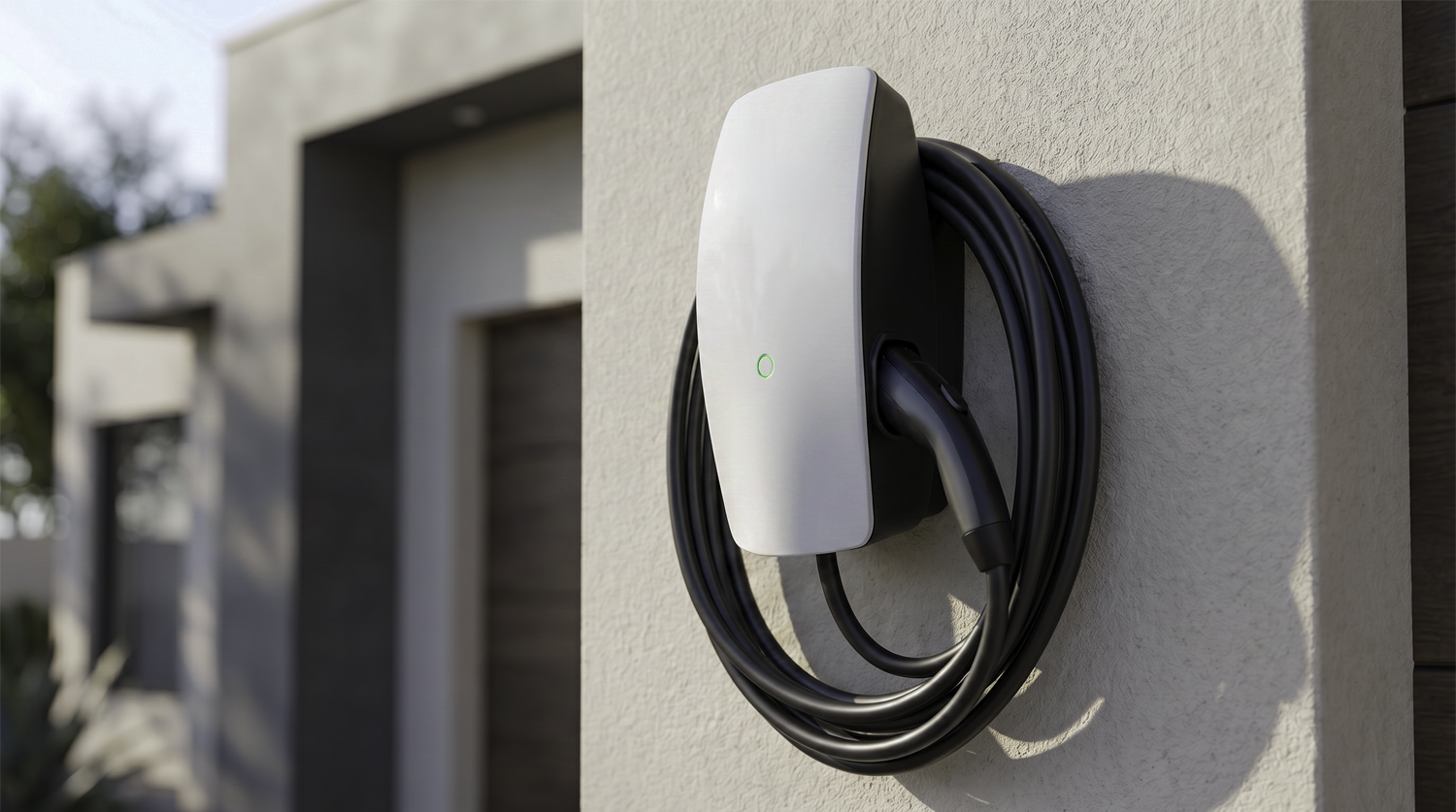
EV Charging at Home: How It Works and Why More Drivers Are Making the Switch
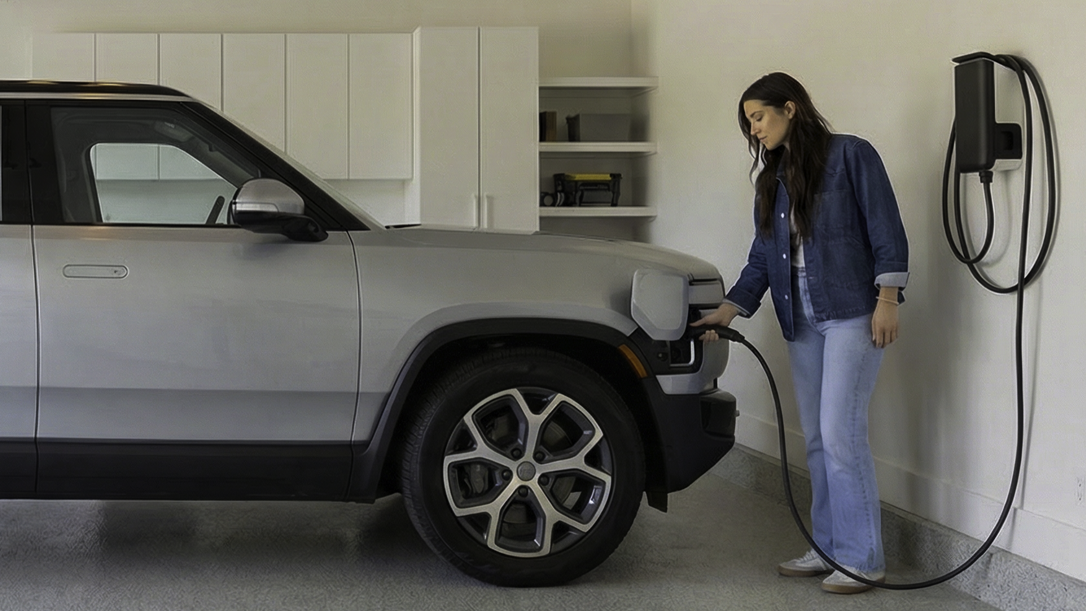
EV charging at home is now a daily reality for millions of Americans. According to recent industry data, around 10% of all light-duty vehicles sold in the US are electric vehicles (EVs), while plug-in hybrids (PHEVs) account for more than 20% of the market. That means that millions of Americans every year are getting accustomed to skipping the gas station in favor of the charging station. And for many, that charging station is found right in their homes.
EV charging at home makes a lot of sense, especially for those who primarily use their vehicle for short daily commutes. Homeowners, landlords, and property managers are also curious about how they can add charging capabilities to their homes. Even those who manage vehicle fleets at work are curious about home charging, especially if their employees can take those vehicles home at night.
This guide covers everything you need to know about EV charging at home: how the technology works, what it costs to install, which incentives are available, and what homeowners, renters, fleet managers, and property developers should consider before making the switch.
How EV Charging at Home Works: A Complete Guide
While EVs are technical marvels, their battery systems are relatively easy to understand. Charging an EV is not much different from charging your smartphone or tablet. The scale is larger, of course, but the basics remain the same: the car's onboard charger converts AC (alternating current) from your home to DC (direct current) for storage in the battery.
Charging speed depends on the equipment level. There are two levels available for home use: Level 1, which uses a standard household outlet, and Level 2, which requires a dedicated 240V circuit. Here is what each delivers in practice:
Level 1 Home Charging: Using a Standard 120V Outlet
Level 1 charging uses the standard 120-volt AC outlet that you use for everything from lamps to toasters. Most EVs come with a portable Level 1 charging cord so you can plug into an outlet in your garage or on the side of your home.
Level 1 requires no installation cost because it uses existing household outlets, but it is not particularly powerful. It is often called 'trickle charging' because it typically adds only 3 to 5 miles of range per hour.
For a plug-in hybrid with a small battery, Level 1 charging is likely sufficient. For a full EV, however, it can take 30 to 50 hours to go from near empty to a full charge.
Level 2 Home Charging: The EVSE Standard for Daily Use
A Level 2 home charger uses a 240-volt circuit, similar to what powers a clothes dryer or an electric range. It is the setup most drivers prefer for daily use, and by doubling the voltage it can deliver 15 to 35 miles of range per hour.
This boost in charging capability allows most EVs to go from nearly empty to full charge in 4 to 9 hours. For most drivers, that means plugging in before bed and waking up to a fully charged vehicle every morning.
The Role of Smart Chargers
Many residential EV charger installations include smart charging capabilities. A smart charger is a connected Electric Vehicle Supply Equipment (EVSE) unit that goes beyond basic power delivery. It adds functionality such as:
- Schedule charging during off-peak hours, when electricity rates are typically lower.
- Monitor energy usage via a smartphone app.
- Balance the load to prevent the car from drawing too much power when larger appliances, such as your washing machine or dishwasher, are in use.
Understanding EV Connector Types
Not all EVs plug in the same way. The two connector standards you are most likely to encounter for home charging are:
- J1772 (Type 1): The North American standard for Level 1 and Level 2 charging. Nearly every non-Tesla EV sold in the US uses a J1772 connector, and most home EVSE units are built around it.
- NACS (North American Charging Standard): Originally developed by Tesla, NACS is now being adopted by Ford, GM, Rivian, and other major manufacturers. As of 2025, many new EVs ship with a NACS port natively, though J1772 adapters are widely available for older home chargers.
Before purchasing a home charger, confirm which connector standard your vehicle uses. Choosing a compatible EVSE unit from the start avoids the cost and inconvenience of adapters and ensures the charger will work with future vehicles you may own.
Level 1 vs. Level 2 for Residential Use
Here's a table to help you visualize the differences between a Level 1 and Level 2 home charger:
While Level 1 is easy to get started with, it might not provide the charging power you need if you have a busy weekend planned, or a traffic jam makes your commute extra long one day.
Cost Considerations for Home EV Charging
Is a Level 2 home charger worth the investment, or is a standard outlet sufficient for your needs?
The answers will depend on whether you have an EV or a PHEV, how far you typically drive, the cost of electricity in your area, and other factors specific to your situation. Here's an overview of the factors you should consider:
Upfront Equipment and Installation
A high-quality Level 2 charging station can cost anywhere between $300 and $800. The more significant cost is typically the installation itself: the labor and materials required to have a licensed electrician wire the dedicated circuit.
If your electrical panel is in the garage and has space, installation might cost between $800 and $1,500. If the panel needs an upgrade (from 100A to 200A) or the charger is far from the power source, costs can reach $3,000 or more.
Electricity Rates and ROI
Charging an EV at home costs significantly less per mile than fueling a gas vehicle. While the upfront cost of a residential Level 2 installation can reach four figures, comparing electricity and fuel costs over time reveals a clear financial advantage for most drivers.
On average, charging at home costs about $0.03 to $0.06 per mile, compared to roughly $0.12 to $0.18 per mile for a gas vehicle. For a driver covering 12,000 miles a year, the fuel savings can easily exceed $1,000 annually, allowing home charging equipment to pay for itself relatively quickly.
Incentives and Rebates
The Alternative Fuel Vehicle Refueling Property Tax Credit covers 30% of hardware and installation costs, up to $1,000. The credit applies to property placed in service between January 1, 2023, and June 30, 2026, and is claimed on your federal tax return. If you are planning a Level 2 installation, acting before the deadline maximizes your savings.
Many local utility companies also offer rebates when you install a smart charger and enroll in a time-of-use (TOU) rate plan. Contact your electricity provider to find out whether a rebate program is available in your area.
Why More Homeowners Are Choosing EV Charging at Home
The growing adoption of home EV charging is driven by more than cost savings. For many drivers, it represents a fundamental shift in how they fuel their lives. The primary benefits include:
- A "full tank" every morning: Imagine never having to stop at a gas station on a cold morning. Charging overnight ensures your vehicle is ready to go every single day.
- A reduced dependence on public charging: While public fast-charging networks are expanding, they can be expensive and sometimes unreliable. Home charging provides a "private station" that is always available.
- Energy independence: For homeowners with solar panels, home EV charging lets them power their transportation with energy they’ve generated themselves, further insulating them from fluctuating energy prices.
EV Charging at Home for Fleet Managers and Property Owners
For companies that assign take-home vehicles, home charging is not just a convenience. It is increasingly the most operationally efficient charging strategy available. Rather than relying on depot charging or public networks, many fleet managers now structure their programs around employee home charging, reducing overnight fleet management overhead significantly.
Developing a clear reimbursement strategy is essential before rolling out a take-home EV program. Many smart chargers can isolate the energy used by a work vehicle from the rest of a household's consumption, giving employers an accurate picture of work-related charging costs. Pairing that data with a telematics device like Bouncie adds another layer of visibility, giving fleet managers access to mileage driven, routes taken, and driving behavior so that reimbursements reflect actual work use rather than estimates. Together, these tools allow companies to reimburse employees accurately, keep personal and business expenses cleanly separated, and build a take-home EV program that is straightforward to administer and easy to scale.
Home builders and property managers are also considering what it takes to make buildings "EV ready." For new construction, running conduit for an EV charger during the build is far less expensive than retrofitting a finished home later, and forward-thinking builders are increasingly making it standard practice. Meanwhile, apartment and condo managers are increasingly installing shared Level 2 stations to attract high-value tenants.
Challenges and Planning Considerations
Home EV charging is practical for most drivers, but several planning considerations apply depending on your property type, electrical infrastructure, and living situation. The most common challenges are:
- Electrical capacity: Many older homes (pre-1970s) may only have 100-amp service. Adding a 40-amp or 50-amp EV circuit often requires upgrading the panel.
- Smart load management: As more EVs hit the grid, "managed charging" becomes critical. Using smart chargers to stagger vehicle charging prevents local transformers from being overloaded.
Home Charging for Apartment and Condo Residents
Renters and condo owners face a challenge that homeowners do not: charger installation typically requires landlord or HOA approval. The good news is that legislation is shifting this dynamic in residents' favor. A growing number of states have passed "right-to-charge" laws that require HOAs and landlords to permit residents to install EV chargers at their own expense, provided the installation meets safety standards.
For multi-unit buildings, shared Level 2 charging stations in parking garages are becoming increasingly common. Property managers who invest in shared EVSE infrastructure are finding it a meaningful differentiator when attracting tenants who drive EVs. If you are a renter, start by reviewing your state's right-to-charge legislation and submitting a written request to your property manager outlining the installation scope and cost responsibility.
EV Home Charging Safety Best Practices
Home EV charging is safe when installed and used correctly. Here are the key safety practices every EV owner should follow:
- Use a dedicated circuit. A Level 2 charger should always be on its own dedicated 240V breaker. Sharing a circuit with other high-draw appliances increases the risk of tripped breakers or overheating.
- Hire a licensed electrician. DIY installation of a 240V circuit is not recommended. An incorrectly wired circuit can damage your vehicle's onboard charger or create a fire hazard.
- Choose a UL-listed charger. Look for chargers certified by UL (Underwriters Laboratories) or an equivalent testing body. This certification confirms the unit has passed safety and performance standards.
- Inspect your charging cable regularly. Check for fraying, kinks, or exposed wiring before each use, especially if the cable is stored outdoors.
- Do not use an extension cord. Level 2 chargers draw sustained high current. Standard extension cords are not rated for this load and pose a fire risk.
FAQs About EV Charging at Home
The questions below address the most common concerns homeowners, renters, and fleet managers have when evaluating a home EV charging setup.
How long does it take to charge an EV at home fully?
On a Level 2 charger, most EVs take 4 to 9 hours to charge. On a Level 1 outlet, it can take 30 to 50 hours.
Is professional installation required for a Level 2 charger?
Yes. A Level 2 home charger requires a dedicated 240V circuit with its own breaker, and installation must be performed by a licensed electrician. Improper wiring can pose a fire hazard or damage your vehicle's electronics.
How much does it cost per month to charge an EV at home?
For the average American driver, EV home charging might add $30 to $60 to the monthly electric bill, depending on location and usage patterns.
Are home EV chargers safe to use daily?
Yes. Daily charging does not significantly degrade most EV batteries. To maximize long-term battery health, many manufacturers recommend keeping the charge level between 20% and 80% for routine use. Some EVs include an optimized charging mode that manages this automatically, making a full charge to 100% safe for daily use.
Can multiple EVs share one home charger?
Yes, with some coordination. The simplest approach is to alternate charging nights between vehicles. Alternatively, a dual-port charger or two smart chargers on a shared circuit can split available power automatically between both vehicles.
Can I install a Level 2 charger myself?
It is not recommended. A Level 2 charger requires a dedicated 240V circuit with a correctly sized breaker, proper grounding, and weatherproof wiring if the charger is mounted outdoors. Most jurisdictions require a licensed electrician to pull a permit for this type of work. Improper installation can void your charger's warranty, damage your vehicle, or create a fire hazard. The cost of professional installation is modest relative to the risk of doing it incorrectly.
What is EVSE?
EVSE stands for Electric Vehicle Supply Equipment. It is the technical term for the hardware that delivers power from your home's electrical system to your vehicle's onboard charger. What most people call a "home EV charger" is more precisely an EVSE unit. The EVSE manages the communication between the grid and the vehicle, controls the rate of charge, and includes safety systems that cut power if a fault is detected. Level 1 and Level 2 charging equipment are both forms of EVSE.
Getting Started with EV Charging at Home
EV charging at home is quickly becoming as routine as overnight phone charging. Whether you are a homeowner evaluating a Level 2 installation, a property manager future-proofing your building, or a fleet manager tracking take-home vehicle usage, the shift toward home-based charging creates real operational advantages. Tools like Bouncie help fleet managers monitor vehicle location, driving habits, and mileage to complement a home charging program. Explore how Bouncie supports EV owners and fleet operators.